A Record vs CNAME: Real Use Cases Explained
Quick Answer: An A Record connects a domain name straight to a fixed IP address. A CNAME, on the other hand, links an alias to another domain name. Use A records for your main domain to point to a specific server. For subdomains like www or blog, use CNAME records to make updates easier if […]
SPF vs DKIM vs DMARC: What Each Actually Does

Quick Answer: SPF lists the IP addresses allowed to send email for your domain. DKIM attaches a digital signature to verify that the message wasn’t altered in transit. DMARC tells the receiving server what to do if SPF or DKIM checks fail (e.g., reject the email or send it to the spam folder). Why Email […]
Authoritative DNS vs Recursive DNS (Full Breakdown)
Quick Answer: Recursive DNS acts as the “librarian,” searching the Internet to find the IP address for a requested domain. Authoritative DNS acts as the “source of truth,” storing the official records for that specific domain. When you type a URL, your browser asks the recursive resolver to fetch the answer from the authoritative server. […]
Public DNS (Google vs Cloudflare): Speed & Privacy Comparison
Quick Answer: If you want the fastest, most reliable browsing experience with the broadest caching, Google Public DNS (8.8.8.8) is the industry standard. However, if you care deeply about privacy and want a resolver that transparently purges your query logs every 24 hours, Cloudflare DNS (1.1.1.1) is the better choice. Both are significant upgrades over […]
IPv4 (A Record) vs IPv6 (AAAA Record): When It Matters

Quick Answer: An A record (Address record) maps a domain to a 32-bit IPv4 address, while an AAAA record maps it to a 128-bit IPv6 address. You need A records to be compatible with legacy systems. You need AAAA records to support modern internet traffic and to bypass the limitations of the shrinking IPv4 address […]
CNAME vs 301 Redirect: SEO & Technical Differences
Quick Answer: A CNAME record handles name resolution at the DNS layer by pointing one hostname to another without changing the browser URL. A 301 redirect is an HTTP response code issued by a web server that actively forwards users and search engines to a new URL, transferring 100% of the PageRank link equity. Common […]
Managed DNS vs Registrar DNS: Which Is Better?
Quick Answer: Registrar DNS is a basic, free service bundled with your domain registration, suitable for simple sites with low traffic. Managed DNS is a specialized third-party service that offers superior performance through global Anycast networks, advanced traffic routing, and enhanced DDoS protection. If your site generates revenue or requires high uptime, Managed DNS is […]
DNSSEC vs Traditional DNS: Security Trade-offs

Quick Answer: Traditional DNS resolves domains by trusting the first response it receives, making it vulnerable to cache poisoning. DNSSEC (Domain Name System Security Extensions) fixes this by adding cryptographic signatures to DNS records, ensuring the data you receive is authentic. The trade-off is higher operational complexity and the risk of taking your site offline […]
Anycast DNS vs Unicast DNS: Performance Comparison
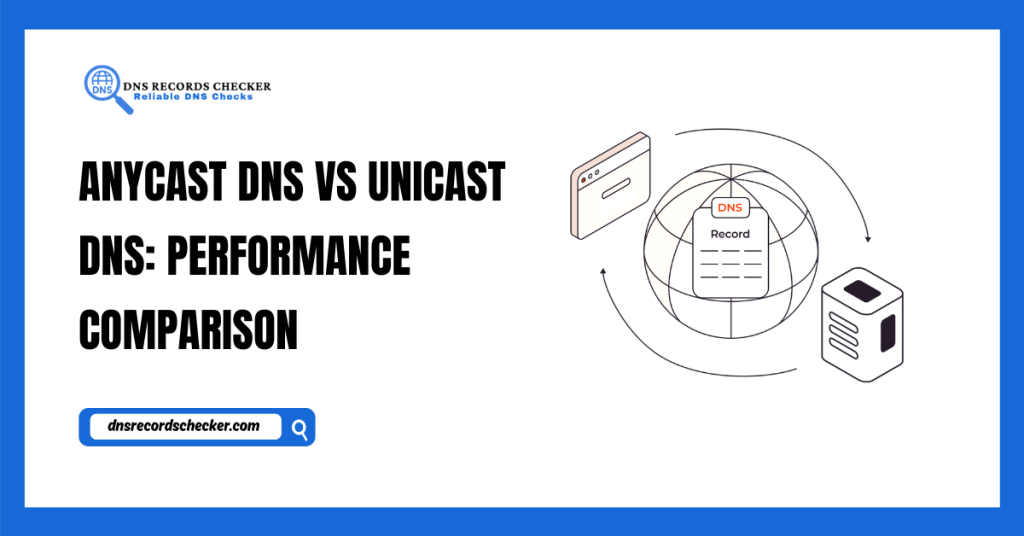
Quick Answer: Unicast DNS directs traffic to a single, static IP address on a specific server, making it vulnerable to latency and downtime. Anycast DNS advertises the same IP address across multiple global nodes, using BGP routing to connect users to the nearest server topologically. Anycast is the industry standard for performance and DDoS resilience. […]